
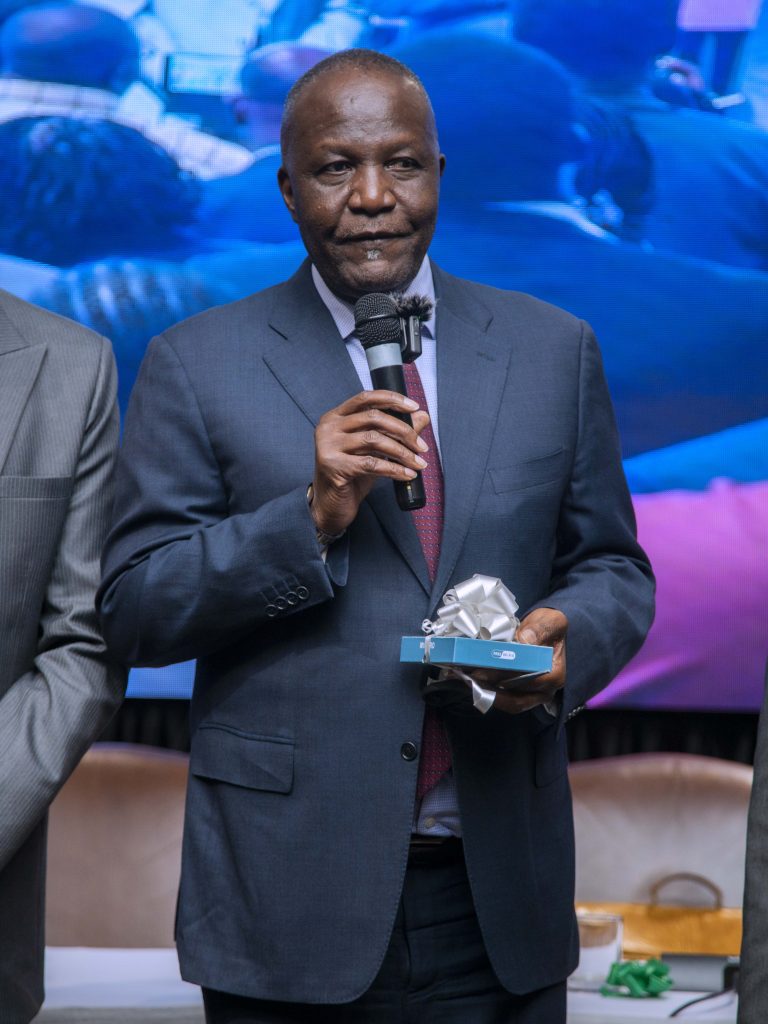
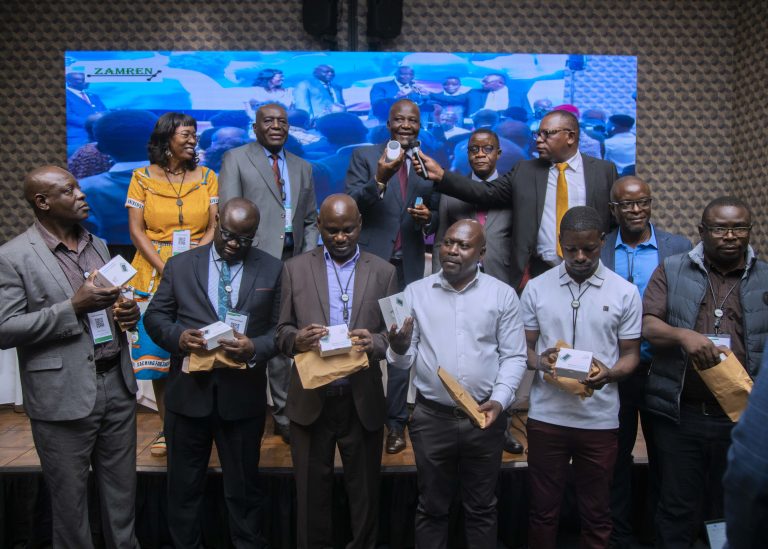

The future of learning is no longer tied to lecture rooms, libraries or physical Wi-Fi hotspots.
That message came out strongly during the official opening of the 2026 ZAMREN Week and Annual General Meeting (AGM) in Livingstone, where the launch of the eduroam on-device proof of concept emerged as one of the major highlights of the conference.
Officially opening the event, Minister of Technology and Science, Hon. Felix C. Mutati, described the innovation as a significant step towards transforming how students, researchers and institutions access knowledge in Zambia.
“This innovation demonstrates that Zambia is moving towards a future where learning and research are no longer confined to physical spaces,” Hon. Mutati said.
The eduroam on-device proof of concept is being implemented through a partnership between the Zambia Research and Education Network (ZAMREN), ZAMTEL and ZedMobile.
Unlike traditional eduroam access which depends on designated Wi-Fi hotspots within campuses, the new initiative allows users to remain connected directly on their devices beyond campus spaces, enabling uninterrupted access to learning platforms, research materials and digital collaboration tools from virtually anywhere.
For students and researchers, this means learning no longer stops once they leave the classroom or library.
The proof of concept has already been rolled out to selected institutions across Zambia namely Kalabo Trades Training Institute, Mwense Trades Training Institute, Ukwimi Trades Training Institute, Mbala College of Nursing and Midwifery, Chitambo College of Nursing and Midwifery, Charles Lwanga College of Education, Technical and Vocational Teachers’ College, Zambia College of Agriculture-Mpika and Kapasa Makasa University.
Speaking during the opening ceremony, ZAMREN Chief Executive Officer, Mr. Stein Mkandawire, reflected on the institution’s transformation over the years from being primarily a connectivity provider into an organisation driving home-grown digital solutions for member institutions.
“In 2022, ZAMREN primarily depended on internet connectivity services. Today, we now provide indigenous digital solutions such as the UNICOSIS Platform, Payroll Systems and Procurement Systems for our member institutions,” Mr. Mkandawire said.
He added that the growing participation at ZAMREN Week reflects the increasing regional relevance of the institution, with the 2026 conference attracting more than 300
participants and delegates from countries including Tanzania, Uganda, Kenya, Malawi, Zimbabwe, South Africa, The Gambia, Ghana and Angola.
Meanwhile, ZAMREN Board Chairperson, Prof. Mundia Muya, emphasized that digital transformation in research and education must be inclusive.
“Learning must be anytime, anywhere, on any device,” Prof. Muya said.
He further noted that ZAMREN continues to expand eduroam access beyond institutions into public spaces such as airports, malls and bus stations as part of efforts to broaden digital inclusion.
The conference also featured a keynote address by renowned academic and technology leader Prof. Arthur Mutambara, who challenged institutions and professionals to remain adaptive and innovative in the age of Artificial Intelligence.
As conversations around digital transformation continue to evolve, the eduroam on-device initiative is already offering a glimpse into what the future of connected learning in Zambia could look like, flexible, inclusive and accessible beyond the boundaries of campus infrastructure.
Held under the theme “Growing Together,” the 2026 ZAMREN Week and AGM brought together researchers, policymakers, Heads of Institutions, ICT experts, innovators, students and cooperating partners from across Zambia and the region to discuss the future of research, education and technology-driven collaboration